
Re-branding Pittsburgh -- one more stupid time
VisitPittsburgh, the city's official tourist site, has blown $2 million to create a campaign to attract more visitors. In 2003 boosters tried to give Pittsburgh a new image that was just as dumb..

Bob Batz Jr. recently wrote this piece for the Post-Gazette announcing the new feel-good, be-proud VisitPittsburgh crusade aimed at getting more tourists to come to Pittsburgh.
Sorry, the campaign, which cost $2 million and carries the contrived and meaningless marketing slogan “Forge on,” is guaranteed to have the same impact on the city’s economy and national reputation as previous wastes of money spent on branding — zero.
It’d take a real reporter — if there are any left in town beside my pal Andy Sheehan — to find out who got the money and point out how rebranding campaigns like this latest one — and the one I complained about in 2003 in the op-ed column for the Trib below — are wastes of everybody’s time, talents and money.
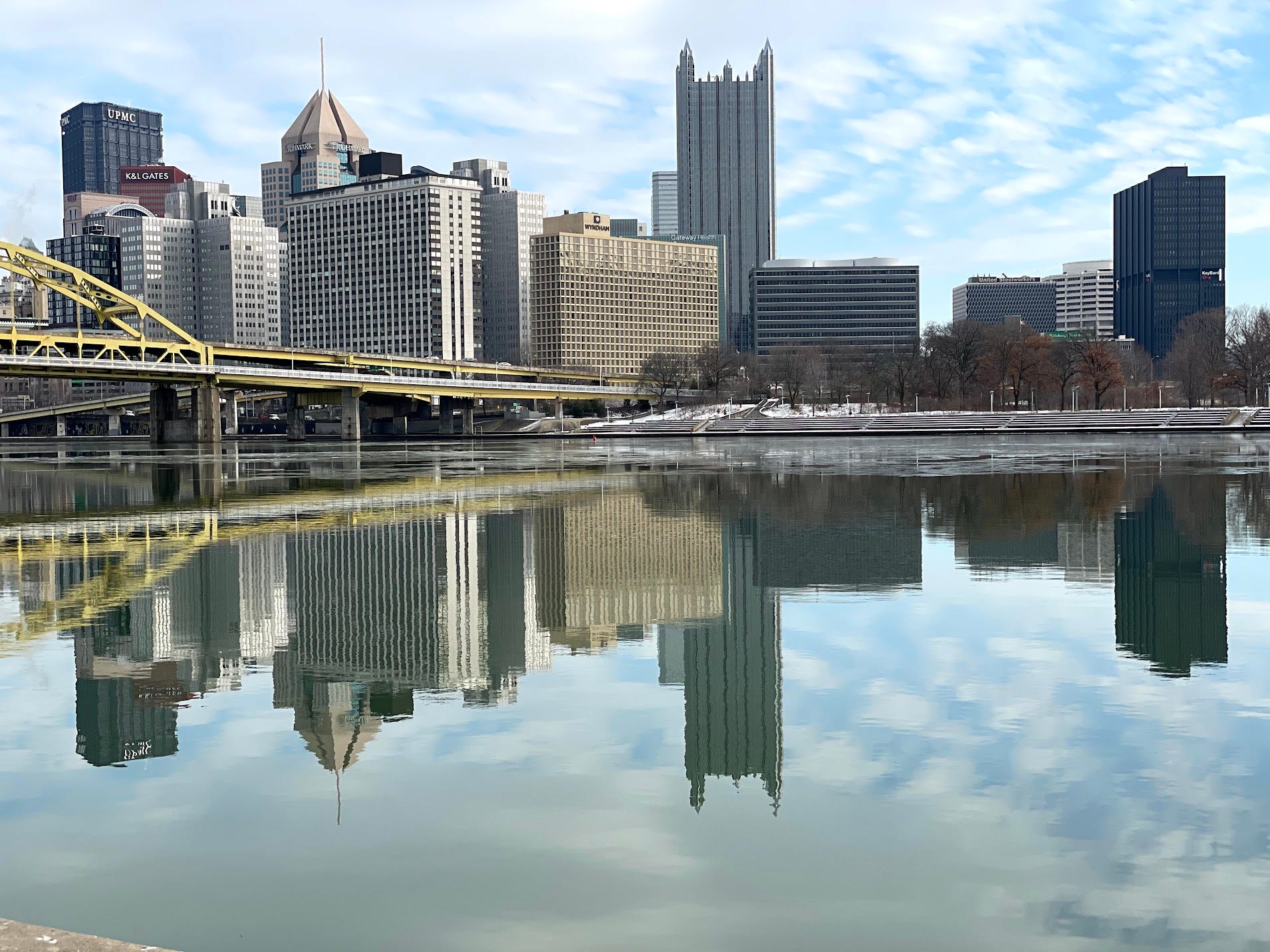
The Steel City searches for a new identity
Pittsburgh Tribune-Review
February, 2003
Help Wanted.
Industrial powerhouse formerly known as the Steel City seeks unique selling image. Fresh image must honestly boil down the natural charms and man-made amenities of Pittsburgh and 10 surrounding counties into a catchy “core brand equity theme” to attract tourists, new businesses and talented young workers to the region. Smoky City, City of Champions, Iron City, City of Bridges, Transplant Town and Hell with the Lid Off need not apply.
Pittsburgh has an image crisis.
For nearly 100 years the city of iron, steel and glass was famous from Tokyo to Chicago to Budapest for a single big thing: it was the smoky industrial powerhouse of the world.
But today Pittsburgh and the region around it -- de-industrialized and depopulated by cruel economic forces it could neither stop nor adapt to -- is known far and wide as ... what?
The home neighborhood of Mister Rogers? The hatchery of NFL Hall of Fame quarterbacks? The capital of ketchup? The birthplace of Christina Aguilera?
The answer, apparently, is none of the above.
Pittsburgh, a region once known for what its mills produced, has no tidy, up-to-date image. The rest of the world still thinks of Pittsburgh, if it thinks of it at all, as the Steel City, an image or “brand name” that doesn’t come close to accurately describing the variety and richness of life-as-we-know-it in southwestern Pennsylvania.
Does this image gap -- the difference between the stale national perception of Pittsburgh and the current reality -- really matter?
It does if you are trying to attract new companies, more tourists or fresh, young talented workers to Pittsburgh, which is why the movers and shakers in the region formed the Image Gap Committee.
Made up of Pittsburgh’s best and brightest advertising and marketing specialists and its most concerned corporate and civic leaders, the 80-plus member committee is halfway through the process of trying to create a new and updated “brand essence” that everyone in Pittsburgh can unite behind and use in a coordinated, focused way to sell itself to the outside world.
The idea of branding cities the way Procter & Gamble brands laundry detergent is all the rage among chamber of commerce and economic development types.
City-regions in North America, Europe and Australia have been branding themselves, each trying to attract attention (and thereby gain economic advantages) in an increasingly competitive global marketplace where cities can no longer afford to be forgotten or misperceived.
Cities with the same needs and goals as Pittsburgh already have embarked on branding campaigns.
Greater Louisville Inc., which represents seven Kentucky counties around “Derby Town,” is spending $1 million a year to retain, bring back or attract the talented professionals between 25 and 40 who disproportionately start new companies that create jobs and economic growth.
Since about 1997, Philadelphia, outfitted with the new tag line “The Place That Loves You Back,” has spent about $15 million to improve its old image.
It’s been selling itself as an exciting, fun-filled place to potential consumers in and out of the city -- corporate bosses, new residents, tourists, students and conventioneers -- but especially to Baby Boomers.
Apparently, Philadelphia’s efforts have paid off. According to American Demographics magazine, between 1997 and 1999 the region was able to lure 3.2 million additional overnight visitors to its hotel and motel rooms, adding $335 million in hotel tax revenues.
Of particular interest to Pittsburgh’s brand new future is what has been done in the city of Hamilton, Ontario, a metropolis of 503,000 midway between Buffalo and Toronto on Lake Ontario.
The now de-industrialized manufacturing city, once deserving of the nicknames “Steeltown” and “The Pittsburgh of Canada,” launched a comprehensive branding and image campaign last fall aimed at attracting investment and workers and changing its national perception.
The $450,000 multimedia campaign includes a new city logo and a radio commercial that uses the theme “reach, dream, rise, shine” and celebrates the city’s economic, geographic, cultural and ethnic diversity.
The city’s communications director, Tom Poldre, says it’s too early to gauge the branding campaign’s success. But he says it already has brought the city a lot of national publicity that is helping to shed its passe steel-town image.
Like Pittsburgh, manufacturing is still important to Hamilton. But health services, agribusiness and bio-tech are among its leading economic sectors today.
“The importance of a brand was to make Hamilton relevant to our target audiences,” Poldre said, adding that Hamilton looked to Pittsburgh for lessons in how a city with the reputation as a milltown can attract talented people and knowledge workers.
In Pittsburgh, the Image Gap Committee has accepted input from dozens of focus groups, in-depth interviews, input from the public and other research to come up with “a core selling point” for the 10-county region.
Pittsburgh’s “regional branding initiative” is a five-to-10-year strategic project, according to Image Gap Committee spokesman Bill Flannigan.
The committee’s final answers will be released March 21. Meanwhile, it has boiled down its data into five themes it feels accurately and honestly reflect the Pittsburgh region’s upsides:
“World Class Urban Setting ... Small Town Feel.”
“A Genuine Opportunity to Make an Impact.”
“Heritage and Current Home of Innovation and Transformation.”
“Pride in Working, Making & Doing.”
And “Urban Beauty Surrounded by Rivers & Outdoor Adventure.”
There’s nothing catchy or very clever about those themes. But as Flannigan and others caution, the $200,000 branding campaign, funded by foundation money, is not designed to produce a bumper-sticker slogan like “I love New York” or “Virginia is for lovers.”
Those enduring phrases came into being almost accidentally, in spite of fierce marketing campaigns mounted by state officials, not because of them.
Pittsburgh will not end up with a single all-encompassing logo or slogan, says Laura Gongos, managing director of the Pittsburgh office of Burson-Marsteller, an advertising and consulting firm helping the branding campaign.
It’ll end up with several messages, each aimed at a specific target audience -- tourists, talent or corporate site-selectors. Its ultimate success will be measured by how many businesses and government agencies in the region use the themes.
Joel Kotkin, one of the country’s top urban economists, has little patience for branding campaigns or civic image-creating exercises, no matter how well-researched or inclusive.
“A city should be identifiable naturally,” he said recently from Los Angeles. “New York is a series of images of New York. It’s that sense of walking down the street with all those tall buildings and all those lights. Do you think San Francisco goes and spends money on its image? San Francisco is San Francisco. L.A. is L.A.”
Kotkin, whose latest book was “The New Geography: How the Digital Revolution Is Reshaping the American Landscape,” is a senior fellow with both Pepperdine University’s Davenport Institute for Public Policy and the Milken Institute.
Though he is well aware of Pittsburgh’s grim demographics - a shrinking, aging population -- and its flat-lining economy, he professes no expertise about Pittsburgh’s current reality. He does, however, know what the perception of Pittsburgh is in the outside world -- “Nothing.”
“People think of Carnegie-Mellon, I guess, if they think hard. The football team. Do they still have a baseball team? I guess they do. It’s sort of a place that’s vaguely on the East Coast. Look, if Philadelphia has become a relative nonentity, what does that mean Pittsburgh is?”
Concocting a fresh image for Pittsburgh shouldn’t take an 80-member Image Gap Committee, Kotkin said.
If he had to sell Pittsburgh to the rest of the country, he’d play to the idea that a lot of people, especially after the Sept. 11, 2001, terrorist attacks, are looking for stability, low crime and community.
“All the indices are showing greater religious involvement, a greater search for community and neighborhoods,” he said. “There’s been a lot of nesting, even among people who are single or are couples without kids. We’re not living in ‘Sex and the City’ anymore.
“It seems to me that Pittsburgh has to offer calmness, neighborhoods. If I were to sell Pittsburgh itself, I’d call it ‘City of Neighborhoods.’ A city built on the organic neighborhoods that are fun to hang out in, that have architectural values. I’d stress small-townness, livability, lack of commutes, community spirit.
“The best thing for Pittsburgh is to preserve its past and create great neighborhoods, and people will discover it. When you think about how a buzz started for Santa Fe, or San Diego, it wasn’t the marketing campaign. It was somebody saying, ‘You know what? I was in San Diego and it was really great!’ Word of mouth is the best sell.
*****
The 2026 Branding campaign
Meanwhile, here, is some of what Batz wrote in his PG article about what ‘Forge on’ is, how it came to be born and the high hopes of its creators:
It’s to be built on five “pillars,” which VisitPittsburgh describes in part like this:
• History to Hero: “Discovering how the Steel City reinvented itself into a vibrant cultural capital.”
• Culinary Craft: Illustrating “a dining scene where ‘old world’ staples like pierogi meet the influence of James Beard-recognized chefs and creative cocktail culture.”
• Arts + Culture: Weaving “a cultural fabric that is both globally significant and deeply local.”
• Signature Events: Highlighting “marquee annual festivals and ‘only-in-Pittsburgh’ traditions ... to showcase the city’s unique creativity and community pride.”
• Neighborhood Makers: “Highlighting the entrepreneurs, artists and chefs across 90 neighborhoods who turn grit into wonder.”
…
The campaign was about a year-and-a-half in the making by VisitPittsburgh and the Madden Media/Karsh Hagan agency, informed by a study by Future Partners. It surveyed 3,000 people, and looked at responses from 50 partners in the Pittsburgh “visitor industry.”
The study showed that while most past visitors — nearly 73% — find Pittsburgh appealing, nonvisitors don’t know about the city’s tourism assets, especially the non-sports-related ones, and don’t think to come here, especially overnight.
This next marketing push is aimed at attracting new visitors, including wealthy ones, and from some new markets. In addition to the usual cities within a 500-mile radius, “Forge on” will be pushed in Atlanta, Buffalo, Chicago and Detroit.
Hotel stays are important for VisitPittsburgh because it gets a lot of its funding from Allegheny County’s 7% hotel tax, but officials stress that longer stays mean that tourists spend more money on everything and support more local jobs.
In 2025, Mr. Bachar said at the annual meeting, tourism accounted for the first time for more than $7 billion in economic impact in the county — an estimated $7.1 billion. That is from an estimated 21.5 million visitors.
VisitPittsburgh itself said it booked 291 events accounting for 375,600 hotel room nights and $433.5 million in direct visitor spending.
He and other officials expect this year to be big, too, what with next month’s NFL Draft here, the Pennsylvania and America 250th anniversaries, the Carnegie International and the Three Rivers Arts Festival happening in its new home at the new Arts Landing on the Allegheny River in Downtown’s Cultural District, among many other events.
Speakers stressed that Pittsburgh is ready for the draft — in 30 days from Monday — that Mr. Bachar framed as “an unparalleled opportunity to showcase Pittsburgh to 50 million viewers worldwide” on top of the hundreds of thousands expected to actually come here for it.
Steelers President Art Rooney II, who noted that he goes back to the 1960s when the NFL held the draft in secret to keep its players from being poached, accepted the Spirit of Hospitality Award on behalf of all of the region’s tourism partners, saying, “It’s really about all of us in this room who make sure our city is a hospitable place to visit.”
Allegheny County Executive Sara Innamorato got a round of applause during a panel discussion when she asked Pittsburghers to support its immigrant and refugee neighbors. “Because of immigrants, we are here as a very rich cultural city.”
And it’ll still be that after the draft, but with many improvements to infrastructure and small businesses and more, said Pittsburgh Downtown Partnership’s President and CEO Jeremy Waldrup. “This is not just for one weekend.”