
Drinking with Batman
Following Steinbeck's trail through Montana exactly 50 years after he fell in love with it, I stopped in Livingston and had a beer with Michael Keaton, the Pittsburgher who never went Hollywood.

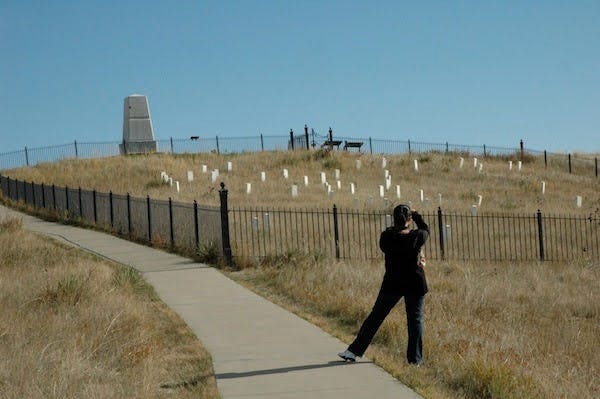
In 1960 John Steinbeck and his poodle Charley raced west from Chicago to Seattle in about seven days. After speeding across North Dakota and sleeping in a motel in Beach, N.D., he visited the Little Bighorn Battlefield National Monument, aka the site of Custer’s Last Stand. Then, on Oct. 13, the same day Bill Mazeroski’s walk-off home run gave the Pirates their shocking victory over the Yankees in the World Series, he stopped in Livingston — and so did I, exactly 50 years later.
To Livingston, I Presumed
He had never visited Montana before, but Steinbeck chose the right place for the first of his two sleepovers in the state. After leaving the Custer battlefield site, he worked his way west to Livingston, which is stretched along Old Highway 10 on the bank of the Yellowstone River. He had covered about 400 miles on Day 4 of his Seattle Sprint. Crossing the sweeping plains of eastern Montana and slowly climbing into the shadow of the Rockies, he fell in love with Montana at first sight, as most normal people can’t help but do. Montana’s spectacular natural beauty put a spell on him. As he would famously write in Charley, “Of all the states it is my favorite and my love.”
Steinbeck confessed his new love to his wife Elaine in a letter from Livingston that night. Though he told her he was at a trailer park “outside of Bozeman,” he was almost certainly in Livingston. It’s only 27 miles east of Bozeman and the towns are separated by the desolate and motel-less Bozeman Pass, which nears 6,000 feet as it cuts through the Gallatin and Bridger mountains.
Adding the long day’s events to the letter he had written the night before but had not mailed yet, Steinbeck gushed over Montana’s “grandeur.” He described “the little square burnt-up men” he saw in the bars, mentioned his Little Big Horn side trip and told his wife about the old-fashioned stockman’s hat he bought in Billings to replace his naval cap, which he said was attracting too much attention so far from the sea. It was very cold and Steinbeck said there was snow in the Rockies and on the “great snowy mountain beside me.” He was heading toward Idaho in the morning, he said, but didn’t think he’d make it. Montana was not only huge. It was so beautiful he drove slower than usual so he could gawk at it.
As Steinbeck did 50 years earlier, I got a stunning dose of what Montana was most famous for on my relaxed drive from Billings to Livingston on I-90: Gigantic sky, gigantic land, jagged mountain ranges running every which way, an endless sunset and not enough humans to form a Wednesday night basketball league.
With a population of almost 1 million, Montana has 300,000 more people today than when Steinbeck blew through it. Huge and rural and wild, it’s still 99 percent empty. Like so many of the states on the Steinbeck Highway, it’s not even close to being a microcosm of America. In 2010 it was 90 percent Caucasian with twice as many Native Americans as Latinos and more Asians than blacks. It had so few blacks – 4,000 in the whole state – that Butte, a city of 34,000, had fewer African Americans than registered sex offenders.
Montana’s economy is powered by minerals, cattle, wheat and millions of visitors who are lured by a magnificent outdoor rec room that is inhumanely cold in winter and catches fire every summer. Despite its newfound oil and gas riches, the presence of mega-landlord Ted Turner and a trickle of celebrity immigrants from Hollywood, Montana is shockingly poor – the 6th poorest state in terms of median family income.
In the fall of 2010, its unemployment rate was about 2 percentage points lower than the national average of 9.5. Oil and gas development was nothing like North Dakota’s fracking bonanza. And there were no six-figure corporate jobs open in Round Up or Big Timber. Still, Montana was a cheap place to live and housing could be laughably affordable if you didn’t want to own your own mountain.
When I pulled into Livingston’s Yellowstone Inn it was almost dark. I knew my way around the artsy tourist town, which is on the (relative) doorstep of Yellowstone Park and is a popular base camp for fishing and hunting expeditions. I’d been to Livingston half a dozen times before. I’m not a hunter, hiker, kayaker or fly-fisherman. But I’ve seen a fair amount of the state’s “grandeur” and its neighborly people on vacations at my wife’s family’s log cabin in the Lewis & Clark National Forest north of Bozeman.
I had also seen most of Montana’s collection of livable small cities. Missoula was a hip college town. Great Falls, where my wife grew up, and Billings, the biggest city in the state with 104,000 people, were dustier and working class. Bozeman was part Missoula/part outdoor-recreation Mecca. Butte was an ex-copper boomtown that belonged Back East in the Rust Belt. Lewistown was a small jewel set among several mountain ranges in the dead center of the state.
Helena, the capital, I had only seen once, but I imagined it had too many politicians, bureaucrats and lawyers per square mile than was healthy. But as far as I knew, all of Montana’s mini-cities had old residential neighborhoods and solid, healthy, original downtowns with cool old buildings that had made it through the 20th century without being bulldozed, wrecking-balled, gentrified, redeveloped or otherwise “improved” by their local politicians.
Drinking with Batman
On the drive from Billings I had set up a quick meeting with actor Michael Keaton, who was from Pittsburgh but lived on a ranch east of Livingston. I knew Keaton a little bit through my sportscaster brother John and from my time in Los Angeles during the 1980s. Thanks to the magic of cell phones and Keaton’s personal assistant in L.A., we met for a beer at the 2nd Street Bistro in Livingston’s historic downtown
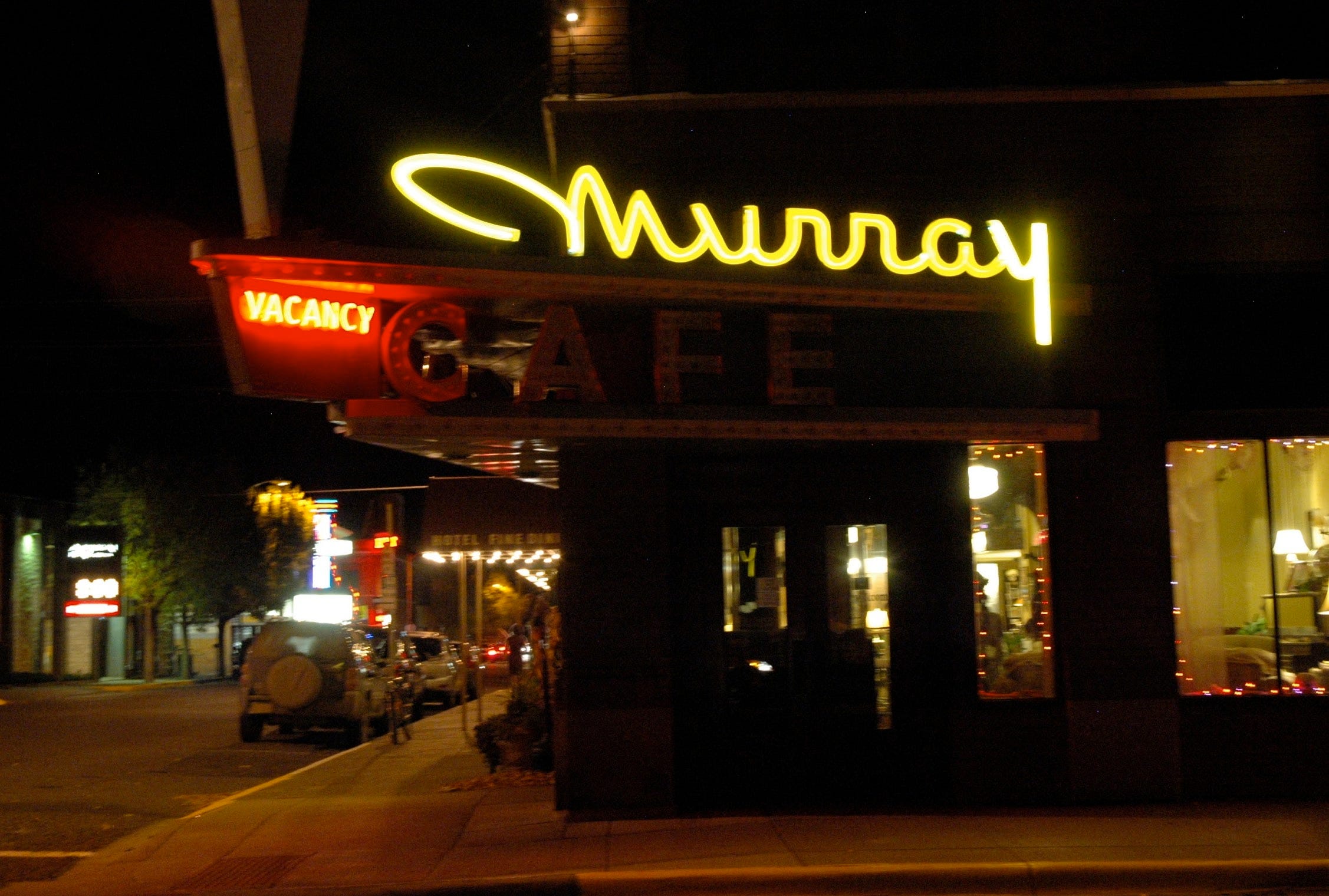
The bistro is on the ground floor of the Murray Hotel, a creaky, uniquely time-warped treasure right on old U.S. 10. The hotel is the most famous of Livingston's old buildings, thanks to its flamboyant neon sign, crazy Western decor and rowdy 106-year-old history. Calamity Jane and Buffalo Bill stayed there – not as a couple, mind you. And there are not-so-tall tales of a grizzly bear in the bar, cowboys riding horses up the stairs and movie director Sam Peckinpah, a permanent resident from 1979-1984, shooting holes in the ceiling of his room.
The bistro, more civilized, was prized for its fine grub and good wine. It had become a safe hangout for Livingston's colony of artists, writers and actors, who included landscape painter Russell Chatham, author Tom McGuane, Margot Kidder and Keaton, who’s well-liked in Pittsburgh as a regular guy who got to play Batman in a movie and make out with Michelle Pfeiffer but never went Hollywood.
Keaton lived up to his good-guy rep. Though we hadn’t seen each other in 15 years, we were like old friends who'd gone elk hunting together the previous weekend. We sat at a mini-bar in the bistro with just the bartender and an actor from New York who, unbelievably, used to live in the same 1927-vintage apartment building I once lived in on Franklin Avenue in Hollywood.
Keaton had been out bird shooting and had an SUV full of dogs at the curb. But before he left we went around to the proletarian Murray Bar to check the score of the Yankees-Rangers playoff game. Dozens of lonely young Montana homeboys were sipping beer, playing pool and praying a bored starlet would walk through the door and ask for a lift back to Hollywood. The Fossils, who did not choose that name by accident, were tuning their guitars.
No one bothered or seemed to recognize Keaton, whose only disguise was a baseball cap. The Murray Bar was the kind of under-illuminated neighborhood man-cave Steinbeck might have slipped into for a dozen beers when he was 25 or 30. The 2nd Street Bistro was more like the upscale places he frequented on his Travels with Charley trip. But like the celebrity colonists from Tinseltown, the bistro wasn’t there in 1960.
From Livingston I continued west toward Seattle on what’s left of U.S. 10, the two-lane highway Steinbeck drove.