
Andy Rooney, anti-war warrior
We had lots of fun making fun of CBS' cranky commentator Andy Rooney back in the 70s, 80s and 90s, the era of Peak Network TV. We were idiots. He was a great writer who knew the awfulness of war.

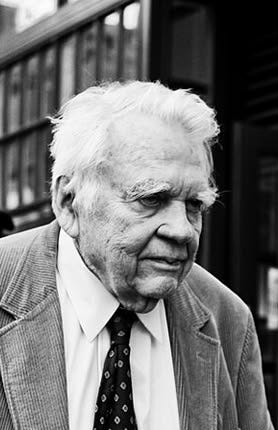
https://www.wikiwand.com/en/articles/Andy_Rooney
This is from Lovely USA https://www.facebook.com/LovelyUSApage/
Andy Rooney’s powerful essay on war
In 1970, Andy Rooney did something almost unheard of in television: he walked away from CBS over a piece of writing.
The network had refused to broadcast his documentary “An Essay on War,” a personal reflection on his experiences as a World War II correspondent. CBS executives found it too pointed, too critical, too uncomfortable for primetime. They wanted it softened or shelved.
Rooney refused both options.
Instead, he quit. He purchased the film from CBS with his own money, found a new home for it on PBS’s “The Great American Dream Machine,” and read the words himself on camera. It was his first appearance on television as a presenter rather than a behind-the-scenes writer.
The essay won him a Writers Guild Award.
But this wasn’t a man chasing recognition. This was a man who had seen too much to ever write anything painless.
As a correspondent for Stars and Stripes during World War II, Rooney was one of six journalists to fly with American bomber crews over Germany in February 1943. He watched young men his own age leave for missions and never return. He walked into barracks where beds were still made, photographs of wives still propped on nightstands, and knew without asking what had happened.
He was among the first correspondents to enter the Nazi concentration camps after liberation. He earned a Bronze Star and an Air Medal for his reporting under fire.
That war shaped him. It taught him that truth matters more than comfort. That specificity matters more than safety. That the real story is never in the statistics—it’s in the faces.
After his break with CBS, Rooney spent time at ABC before returning to the network in 1972. Six years later, on July 2, 1978, he sat down behind a cluttered desk on 60 Minutes and delivered his first regular commentary segment.
He complained about misleading car accident statistics over the Fourth of July weekend.
It was an odd choice for a debut. But that was Rooney. He didn’t chase headlines. He found meaning in the ordinary. A loaf of bread. A desk drawer full of rubber bands. A phone bill. Behind every small thing, he saw a larger truth about how we live, what we accept, and what we shouldn’t.
For 33 years, he closed out America’s most-watched news program with three minutes of observation that could be cranky, funny, or unexpectedly moving. He delivered 1,097 commentaries before stepping away in October 2011.
He died a month later, at 92.
Andy Rooney once said, “A writer’s job is to tell the truth.”
He didn’t mean comfortable truth. He didn’t mean popular truth. He meant the kind of truth that sits in your chest and won’t leave you alone until you put it into words.
That’s what he did, from wartime Europe to Sunday night television.
He never stopped writing. He never stopped pushing. And when someone told him no, he found another way to say what needed to be said.
That’s the legacy he left behind: not just the grumpy commentator at the end of the broadcast, but the war correspondent who never forgot that words have weight, and that the best ones are the ones that rattle the room.
#TruthTeller #JournalismLegacy
~Lovely USA
Andy Rooney - Wikiwand
Andrew Aitken Rooney was an American radio and television writer who was best known for his weekly broadcast “A Few Minutes with Andy Rooney”, a part of the CBS...
Rooney’s anti-war essay
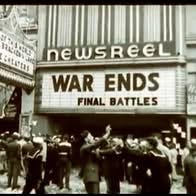
Here is the film Rooney made that CBS rejected and he put up on PBS.
It’s pretty easy to see why CBS -- where I once worked as a low-low-low level censor -- wanted no part of it. Too tough. Too True. Rooney was a great writer who had seen too much of war during WWII to not tell the ugly, stupid truths about it.
"60 Minutes" hasn't been the same for many of us since he died.